
KNOW WHEN THE GROUND IS SHIFTING UNDER YOUR INDUSTRY AND WHAT TO DO ABOUT IT
PREDICTIVE BEHAVIORAL INTELLIGENCE FOR 74 GLOBAL INDUSTRIES AND THEIR DECISION MAKERS
Seeqer tracks social media conversations, economic indicators, accredited news, and university-backed research all in one place so you always know where your market is heading before your competitors do.

this is social listening on steroids.
Most tools track one or two signals. Seeqer’s engine Q pulls in everything and turns it into a single, citable report your team can act on within hours.
SOCIAL MEDIA
Comments, shares, trends, and real-time sentiment across all major platforms. Not just what people post, but what they don’t.
ACCREDITED NEWS
Verified journalism and official reporting from around the world. Filtered for credibility, not just volume.
ECONOMIC INDICATORS
Market data, sector performance, and consumer confidence metrics that signal where spending and behavior are heading next.
RESEARCH DATA
Peer-reviewed studies, government-backed data, and proprietary research that add the depth and credibility traditional social listening misses entirely.
Our Curated Reports

Only 32% of U.S. workers say their company’s surveys truly capture how they feel. And 47% feel pushed to hold back the truth when they fill them out.
The same workers who hold back honest answers often feel safe giving safe ones. Their job satisfaction, how they see leaders, and their relationship with their manager are the three topics they lie about most. That means your retention plans and wellbeing budgets are built on incomplete data. You might lower turnover risk in the wrong places while real problems go unseen. You might spend on perks that address problems no one actually has.
The gap runs deeper than old surveys can see. Younger employees hold back more than older ones (26% of millennials often feel pressured to hold back, compared to 15% of Gen Xers). And people who work in low‑psychological‑safety environments are far more likely to feel tense, stressed, or even report a toxic workplace. When belonging falls by double digits year over year, you cannot fix engagement without fixing the underlying listening failure.
Most employees doubt survey anonymity (37% say they don’t believe surveys are ever truly private).
People who fear retaliation or blame are nearly three times as likely to call their workplace toxic (30% vs. 3%).
Nearly half of workers don’t give honest feedback because they don’t think it will lead to change.
Managers often overestimate how much employees trust them, so leaders miss the real story on burnout and wellbeing.
The result: you get “satisfied” scores from people who are quietly disengaged, while retention risk continues to grow.
Every report is human‑checked and delivered in one business day. You get the latest numbers, not last quarter’s.
Current data points come from the Visier October 2024 survey (1,000 U.S.‑based employees), the APA 2024 Work in America survey (more than 2,000 employed adults), and the Businessolver 2024 belonging survey (3,100 employees, HR pros, and CEOs).

91% of Hispanic Gen Z say their cultural heritage is an important part of who they are.
Many brands still try to reach Latino Gen Z by picking one language. Spanish or English. But that choice misses the real point for most young Latinos. They use Spanglish freely. 20% of Hispanic Gen Z prefer to communicate in Spanglish over English or Spanish alone. Their identity is not either-or. It is both. When ads feel inauthentic, 87% can spot it instantly. That weakens trust. It also hurts retention risk over time. Employees who feel a brand ignores who they are often disengage.
The differences across regions matter too. California’s Latino GDP reached $989 billion in 2023 and will top $1 trillion in 2025. Texas and Florida each add hundreds of billions more. Young Latinos in Texas may connect differently than those in Miami. Yet only 29% of Hispanic Gen Z say language in ads is their top priority. Instead, 67% want brands to show shared values, lived experiences, and cultural signals that feel real. Leaders who skip this listening gap raise their turnover risk. Their workforce planning misses the real drivers of engagement and wellbeing.
59% of Hispanic Gen Z reward brands that acknowledge their heritage. 42% make a purchase after seeing culturally authentic content.
Nearly 80% of Gen Z Latinas strongly identify with their heritage. They expect the businesses they support to show that same cultural understanding.
Bicultural Latinos are 60% more likely than the average consumer to buy from brands that reflect them. 61% will pay more.
Young Latino households (Gen Z and Millennials) drive 65% of all Hispanic spending in the U.S. They are 1.5 times more likely to shop online than the general population.
68% of Latino youth say not enough brands do a good job representing people like them. That feeling has grown each year.
Every report is human‑checked and delivered in one business day. You get the latest numbers, not last quarter’s.
Current data sources include LatiNation/ThinkNow 2025 Hispanic Gen Z study (n=400), Latino Donor Collaborative/Kantar 2024 Latino Youth Report, iHeartMedia bicultural Latinos study, NielsenIQ 2025 multicultural report, and LDC 2025 U.S. Latino GDP Report Part Two.

RN turnover is holding at 17% across the US. And 62.5% of healthcare providers say recruitment and retention is their top challenge for 2026.
Turnover is not the same for every role or person. Some groups leave much faster than others. Early-career nurses face the greatest risk. That threatens long-term workforce stability.
The problem looks different by region too. Turnout in nursing homes varies a lot across the country. And many nurses are already planning their exit.
Every report is human‑verified before delivery. You get the latest numbers, not last year’s.
22% of Gen Z and 21% of millennial RNs leave their positions.
41.3% of LPNs and licensed vocational nurses plan to leave the workforce or retire within five years.
In skilled nursing facilities, CNA turnover stays near 42.3%—far higher than most other healthcare roles.
The average hospital loses between $4.2 million and $6.2 million each year from RN turnover alone.
Turnout for RNs ranges from 14.6% in the Northeast to 18% in the South Central region.
You buy it now. We verify the intelligence and deliver it within 12 hours. You get the most current data.
Every report is human-checked and delivered in one business day. You get the latest numbers, not last quarter’s.
Data sources include the 2026 NSI National Health Care Retention & RN Staffing Report and 2026 Axxess Industry Growth Insights Report.
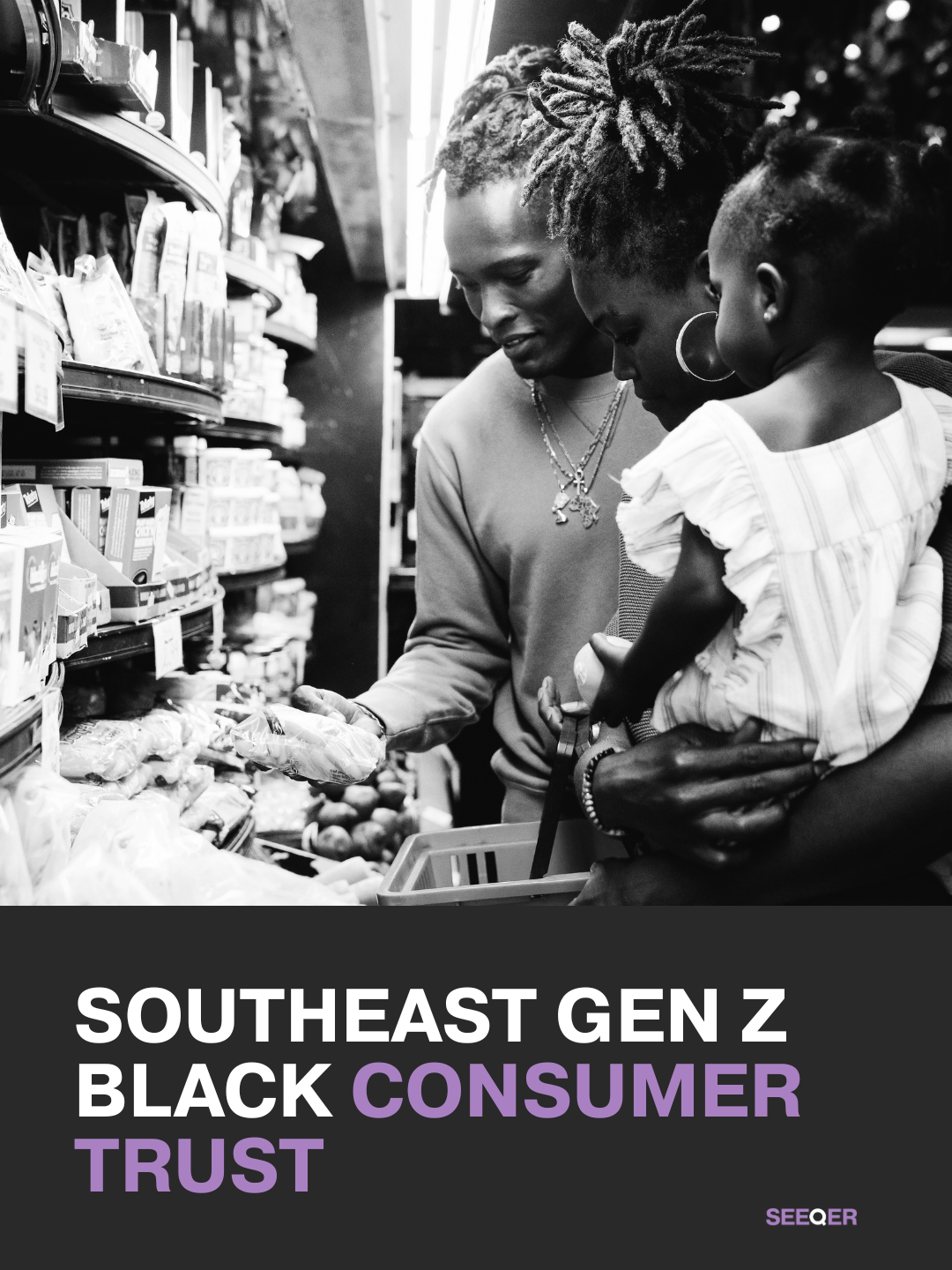
64% of Black Gen Z consumers take direct action based on a brand's sociopolitical stance. That means they choose to buy from a brand or boycott it.
In the U.S. Southeast, this generation is paying close attention. States like Georgia, Alabama, Mississippi, North Carolina, and South Carolina have strong Black communities and a deep culture of local business. When big companies pull back on diversity, equity, and inclusion (DEI), Gen Z Black shoppers notice. Many feel the pullbacks are not just political moves. They feel personal. A retail boycott in the Southeast, including calls from an Atlanta pastor, has gained real momentum.
Trust is the main driver. Over 70% of Black consumers say they will stop buying from brands perceived as devaluing their community. But trust can also be rebuilt through authentic engagement. Over 80% of Gen Z and Millennials say they benefit when Black culture is well‑represented. However, nearly half of Gen Z adults (40%) have already stopped buying from a brand that reversed its DEI efforts. This is not an abstract value. It directly changes shopping behavior.
64% of Black Gen Z consumers take action based on a brand's sociopolitical stance—choosing to buy from or boycott brands.
70% of Black consumers will stop buying from brands perceived as devaluing their community.
40% of Gen Z adults have stopped using or purchasing from brands that contradicted or reversed DEI efforts.
80% of Gen Z and Millennials say they personally benefit when Black culture is well‑represented.
In 2026, Black buying power is projected to reach $2.1 trillion, making this group a major economic force.
Every report is human-checked and delivered in one business day. You get the latest numbers, not last quarter’s.
This report currently synthesizes data from Nielsen, Horowitz Research, Urban One‘s Cultural ROI study, and the Collage Group as of 2025-2026.
WHAT DO YOU GET?
NARRATIVES & DECISION POINTS
CURATED INTEL your team can walk into any room with.
Their values, fears, aspirations, and the emotional triggers that drive their decisions beyond just demographics.
Where they get their news, which platforms they trust, what content they share so you reach them where they actually are.
Where their discretionary dollars go and what shifts that spend. So your campaign lands when and where it has the most impact.
The same customer profile behaves differently in Texas than in New York. Seeqer shows you what that means for your timing, and your spend.
PSYCHOGRAPHIC PROFILES
SPENDING BEHAVIOR
MEDIA HABITS
GEOGRAPHIC BREAKDOWNS
BUYER PERSONAS
Every Seeqer report is a Grade A demographic report built from everything Q has collected. Every brief comes with a full citation list, every data point sourced and human-verified, so you and your clients can stand behind every number in the room. Here is what’s inside:
BUYER PERSONAS
PSYCHOGRAPHIC PROFILES
MEDIA HABITS
SPENDING BEHAVIOR
GEOGRAPHIC BREAKDOWNS
NARRATIVES POINTS
What messaging they’re ready to receive or resist, and what narratives drive them to act.
Who your customers are, what they believe, what narratives move them to action; broken down with specificity.
No matter your industry, Seeqer fits in your workflow.
Across 74 industries and 195 countries, teams use Seeqer at every stage from the first campaign brief to the final boardroom recommendation.
DISCOVERY
Know your audience before you spend a dollar.
Before a campaign launches, use Seeqer to build a complete picture of who you are talking to, what they care about right now, and what will move them.
REAL-TIME RESPONSE
Test your message before you commit the budget.
Run your campaign concepts against real buyer profiles. Know which version will land, and which will fall flat, before you spend.
CHANGE MANAGEMENT
When something big happens, move in 12 hours.
A regulation changes. A strike hits your supply chain. A news cycle shifts your category. Seeqer tells you what it means for your audience and what to say next.
NARRATIVE TESTING
See how your team responds before its a problem.
New leadership coming in? Big internal initiative rolling out? Know how your workforce is responding in real time so you can course-correct early.
Trusted by leaders at
The best time to use Seeqer is before you need it.
Walk into any room with data that's sourced, cited, and neutral. Your team should make decisions, not arguments.
When a market shift hits your industry, you don't have time to start from scratch. The teams who move fastest aren't the ones who react quickest. They're the ones who already have the intelligence ready to go. With Seeqer running in the background, you can go from event to insight in 18 hours.
Things we're curious about














See what Seeqer knows about your industry.
Request a sample brief or book a 15-minute discovery call. No jargon. No pitch deck. Just your data.